
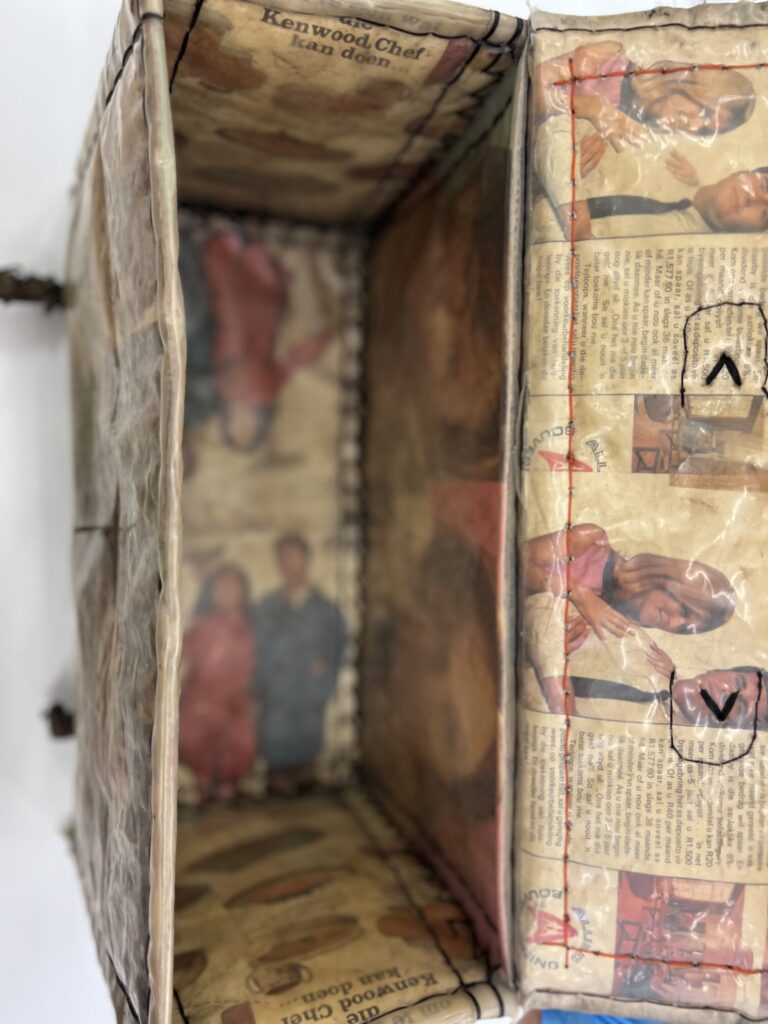
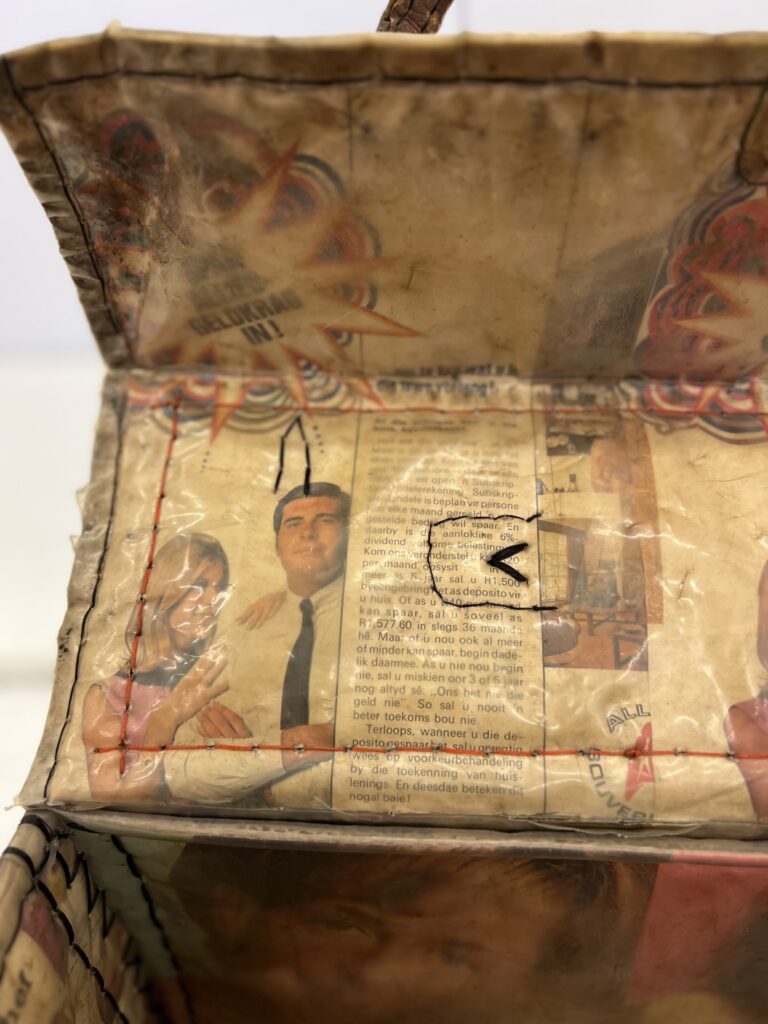
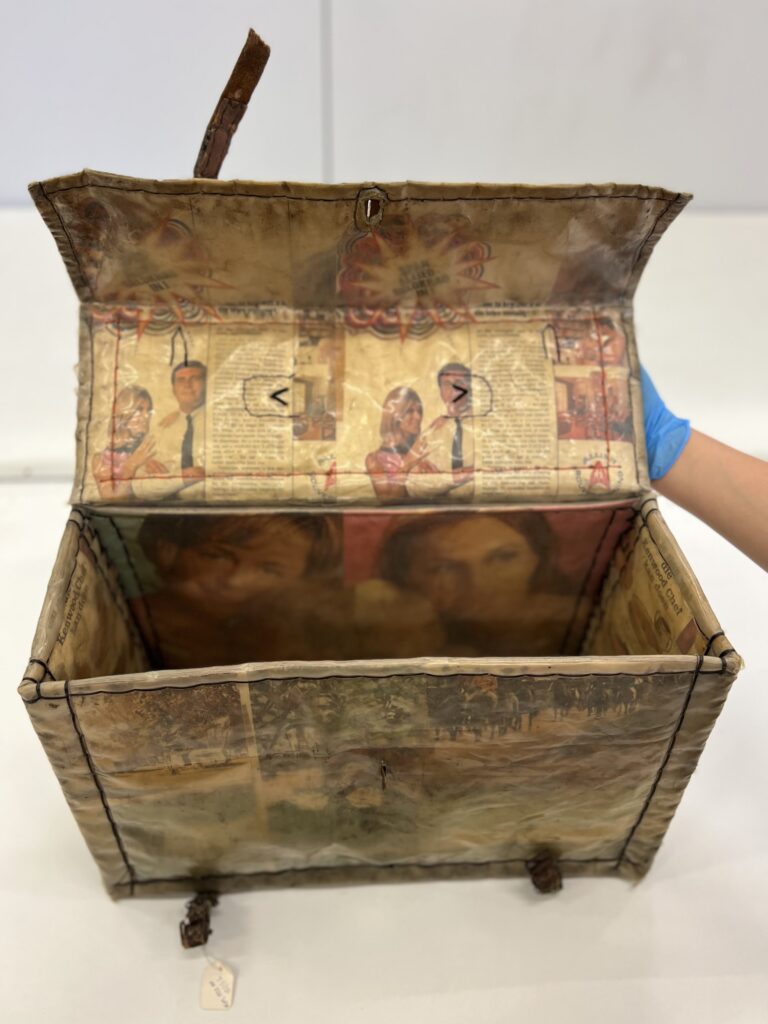
In the images below you can see the detail of the magazines used to create the briefcase
Carcass
Kolgos serves as the hub of a unique savings program organised by political prisoners to gather food, toiletries, and other essential supplies for those prisoners who are less wealthy or affluent than themselves.
The prisoners in that particular cell or area shared all available resources under the Kolgos system. If you didn’t share and were discovered by other convicts, you would be shunned, abandoned, and expelled from the kolgos. Nothing is available to you if you do not belong to the kolgos. Being barred from the kolgos was the most severe penalty, according to a former prisoner.
Up until 1977, solitary confinement and a special diet were still legitimate sentences that South African courts may have imposed as punishment for crimes. The luggage is a symbol of the struggle of political prisoners. Spare diet was no longer an acceptable punishment for crimes after this date, but it was nevertheless an acceptable form of punishment for breaches of prison rules throughout the apartheid era.
Apple-Box
Politicians were released one by one from the infamous Robben Island prison in the 1990s. Additionally, they were carrying boxes that contained all of their valuables from their incarceration behind their backs. The majority of the possessions were books, apparel made in jail, radios, sporting goods, items made in the prison workshop, workshop tools, prison registers, and other things. The meetings and gatherings of some of the most well-known political activists of the time were also covered in these documents, along with their tales from prison. Many of the political prisoners chose to donate their memoirs to the Mayibuye Centre at the University of Western Cape after their release. They arrived with cardboard boxes, almost all of which were apple boxes, detailing their identity and the years of their lives they had given up to imprisonment on this island.
A newspaper story stated, “Kromco, Golden Delicious, Heidedal, Stallion, Cape…always apples.” But fruit was not contained in these boxes. The convicts assembled and collected thousands of documents. The “university” nickname for Robben Island has gained popularity. The political inmates there began to teach in their individual fields of competence despite the warders guarding the prison, and they engaged in lively debate on a variety of subjects, including literature, philosophy, and political theory. This “Robben Island University” flourished as a centre for education and provided some of the prisoners with their first opportunities to pursue higher education. One can find the results of the labour of remarkable guys in these apple boxes.
Pickaxe
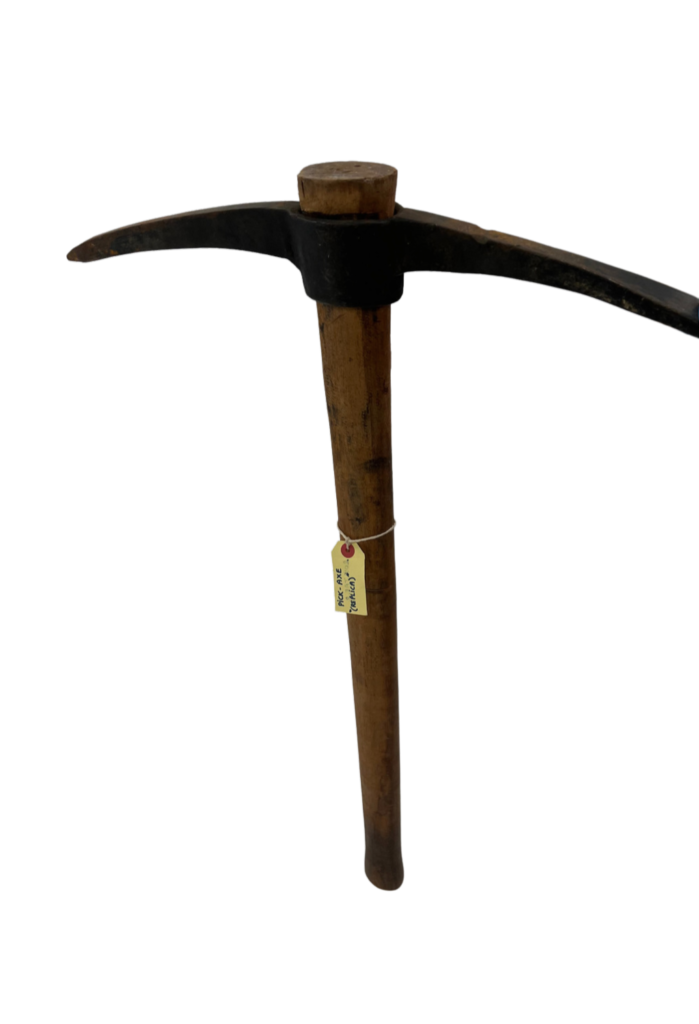
The pickaxe, generally referred to as a hammer or chisel, is a representation of mining. It is used for hoeing, skimming, and chopping through roots, whereas the pointed end is utilised for both breaking and prying. In ancient times, it was designed as agricultural implements. Picks, however, have changed over time to become various tools like the mattock and the plough.
For those inmates who were serving the maximum prison sentence during apartheid, the Lime Quarry on Robben Island served as one type of physical labour. The dust from the limestone, which caused lung ailments and eye issues among the former convicts, afflicted people like Nelson Mandela and Walter Sisulu. The Mandela quarry is the name given to the quarry nowadays. At the quarry, there is a small cave that was carved out by inmate labourers.
One of the earliest evidence of human occupancy on the island is the Robben Island Limestone Quarry. It was created in the middle of the 17th century. The infamous Lime Quarry is located at the centre of the island. The work there was extremely harsh. The dressed stone for the Castle of Good Hope’s foundation in Cape Town came from the quarry.
Nelson Mandela was one of the convicts who toiled at the quarry throughout the years. He spent 13 years there in that job. The limestone on the island wasn’t really needed when Mandela was alive. The labour was mainly just to keep the prisoners busy. They would break up the stone and carry it to one end of the quarry one day, then back the next.